 BUILDS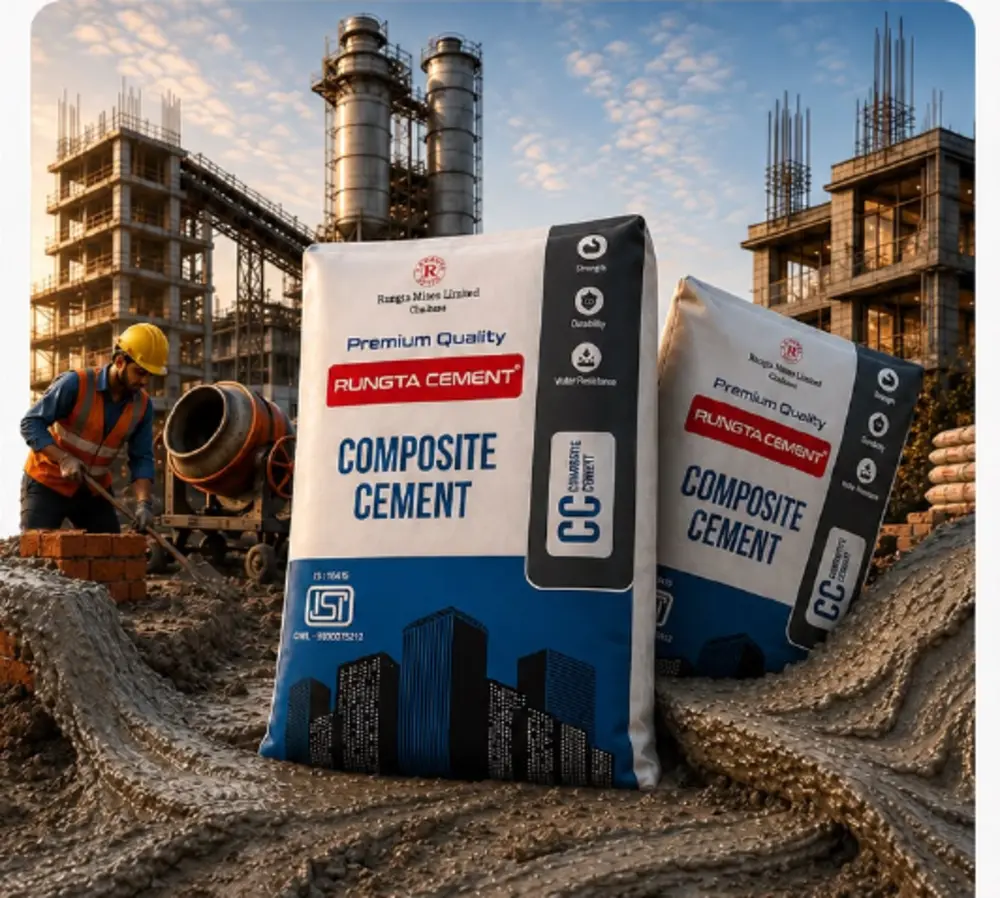
Composite Cement is a blended cement covered by IS 16415, while Portland Slag Cement is covered by IS 455 and contains granulated blast-furnace slag as its principal blending material. Choose according to the structural consultant's specification, exposure conditions, concrete mix and required early-age performance.
The short distinction
Composite Cement combines more than one permitted supplementary cementitious material with Portland cement constituents and is specified under IS 16415. Portland Slag Cement, or PSC, is specified under IS 455 and uses granulated blast-furnace slag as its characteristic blending component.
Both can be appropriate for structural and general construction when used in accordance with the approved design, mix proportions, curing practice and relevant code requirements.
Where Composite Cement fits
Composite Cement is often considered where workability, finish, pumpability, moderated heat development and long-term durability are important. Its behaviour depends on the actual product composition, concrete mix, aggregates, admixtures, water-cement ratio and curing.
For procurement, confirm that the product and its test certificate match the approved project specification. A cement name alone is not a substitute for an approved concrete mix design.
Where PSC fits
PSC is commonly evaluated for durability-led concrete, particularly where resistance to aggressive exposure and reduced heat of hydration are relevant. It can be considered for foundations, marine or coastal exposure, sewage-related structures and mass concrete, subject to the consultant's design and the applicable standards.
Early-age strength development and formwork cycles should be assessed with actual trial mixes rather than assumed from the cement category.
Site practice decides much of the result
Even the correct cement cannot compensate for excessive water, poor batching, inadequate compaction or insufficient curing. Store bags clear of damp floors and walls, follow first-in-first-out rotation, protect stock from moisture and avoid using damaged or partially set material.
For concrete work, control the water-cement ratio, measure materials consistently, compact properly and begin curing at the correct time. The contractor and quality team should retain batch records and test results.
A better way to request pricing
State the cement type, number of bags or tonnage, delivery destination, unloading arrangement and expected schedule. For project supply, also share the approved make list and any test-certificate or batch-age requirement.
This allows the commercial offer to reflect the correct product and logistics instead of treating all cement as interchangeable.
Discuss your requirement
Move from research to the right specification.
Share the application, quantity or opening details with the SSS Builds team for a product-specific discussion.
Explore Rungta CementFrequently asked questions
Direct answers
Which is stronger: Composite Cement or PSC?
Strength depends on the compliant product, concrete mix, water-cement ratio, curing and test age. The cement category alone does not determine the final concrete strength.
Is PSC suitable for coastal construction?
PSC is commonly considered for durability in chloride and sulphate exposure, but the consultant must approve the cement and complete concrete specification for the actual exposure.
Can the two cement types be substituted without approval?
No. A substitution should be reviewed against the approved specification, mix design, exposure class and construction programme.
What should a cement enquiry include?
Mention the cement type, bag quantity or tonnage, delivery location, required date and whether the supply is for trade or a named project.