 BUILDS
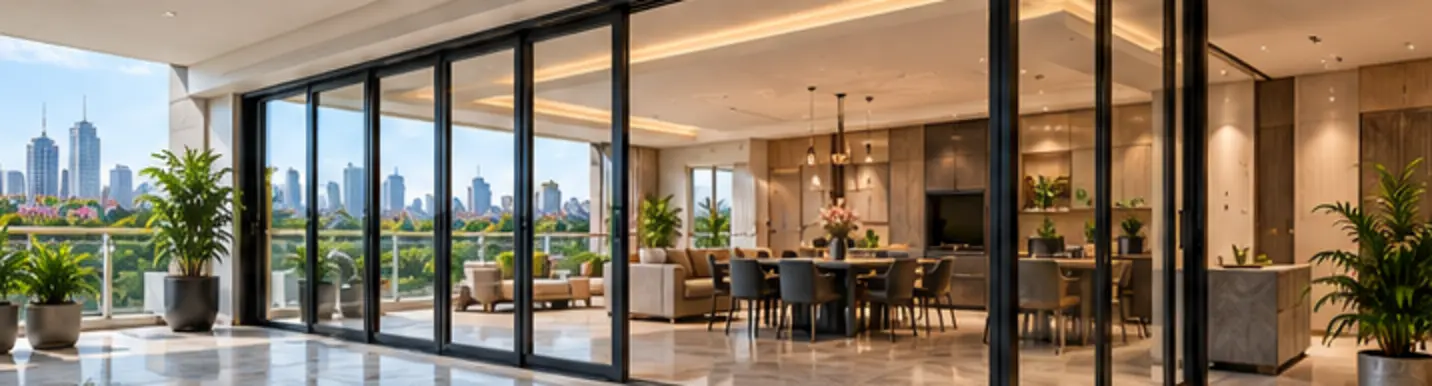
Choose aluminium sliding windows where swing space is restricted or broad horizontal movement suits the opening. Choose casement windows where a large clear openable area, directed ventilation and compression sealing are priorities. The best choice depends on opening dimensions, exposure, safe operation, glass, hardware and installation—not the opening style alone.
Sliding vs casement aluminium windows at a glance
Start with the room layout and the actual openable area. These are common design differences; final performance belongs to the selected system and installed configuration.
| Factor | Sliding | Casement |
|---|---|---|
| Operation | Sashes move horizontally on tracks | Sash opens on hinges |
| Swing space | No projecting swing zone | Clear inward or outward swing zone needed |
| Ventilation | Depends on overlapping and fixed panels | Can expose most of a single sash opening |
| Rain protection | Track, seals, interlocks and drainage | Gaskets, hardware compression and drainage |
| Maintenance | Tracks, rollers and drain paths | Hinges, stays, locks and gaskets |
| Large openings | Suitable sliding or lift-and-slide series | Subject to hinged sash size and weight limits |
When are aluminium sliding windows a good choice?
A sliding sash stays within the frame plane, so it avoids projecting into a room or balcony. This can suit compact rooms, furniture close to the opening and narrow external circulation zones. Check handles, screen tracks and cleaning access as well as the sash movement.
The number of tracks and fixed panels determines how much of the opening becomes clear. In a conventional two-panel slider, one sash generally overlaps the other rather than opening the full frame width. Ask for an elevation showing the movable panels and stacking direction. For larger balcony glazing, compare a standard slider with an appropriate lift-and-slide system instead of assuming all sliders use the same construction.
When are casement windows a better fit?
A side-hinged casement can open inward or outward, depending on the series. A fully open sash can expose most of its own opening and may help direct a breeze. This makes casements useful where the room needs a generous ventilation opening within a smaller frame.
The sash requires a clear and safe swing zone. Review outward movement near walkways, ledges and facade access; review inward movement near curtains, furniture and countertops. Hinges, stays, glass weight, sash dimensions and opening controls must suit the application. A large hinged panel should not be selected only because it looks attractive in an elevation.
Compare ventilation using actual openable area
Do not compare ventilation from overall frame width alone. Ask the supplier to show the effective openable area after accounting for fixed panes, overlapping sliders, screens and opening restrictions. A wide window with limited movement may ventilate less than expected.
Eco-Niwas Samhita treats openable area and cross-ventilation as design considerations. Airflow also depends on openings elsewhere in the room, orientation and obstructions. Choosing a casement does not by itself create cross-ventilation, while a multi-track slider may provide a useful opening where swing clearance is unavailable.
Which type is better for Kolkata rain and wind?
Both opening styles can form part of a suitable system. Casements commonly use gaskets and locking hardware that compress the sash against the frame. Sliders use tracks, seals, interlocks and designed drainage paths. Compare evidence for the proposed series, dimensions, glazing and configuration rather than accepting an unsupported claim that one type is always superior.
The frame-to-wall joint, sill support, anchors, drainage outlets and exterior finishing also matter. For an exposed upper-floor opening, give the supplier the project wind and water requirements before a price is finalised. Do not copy a test result from another series or assume it applies to an enlarged sash.
Specify glass, screens and maintenance together
Heat, sound, daylight and safety depend on the complete window assembly. Define glass construction, thermal-break needs, gaskets, locking, colour and finish alongside the opening type. A slim sightline alone does not establish thermal insulation or acoustic performance.
Confirm how the mosquito screen will operate. A slider may use a separate screen track; a casement may need a compatible fixed, hinged or retractable arrangement. Accessible sliding tracks need periodic cleaning. Casement hinges, stays, handles and seals need inspection. A sash that drops, rubs or becomes difficult to lock should be serviced instead of forced. Include suitable opening controls where children or height create a safety concern.
Get a comparable aluminium window quotation
Send SSS Builds your opening sizes, photographs, room use, floor, orientation and preferred operation. Add the number of tracks or sashes, glass specification, screen requirement, finish, locking and opening-control needs, project performance criteria and installation scope.
SSS Builds can coordinate system selection, measurement, fabrication and installation around the project requirement. Request a written configuration for each opening so the architect and owner can compare like-for-like offers. Final selection should respect the approved drawings, system limits, site conditions and delivery programme.
Technical references
Discuss your requirement
Move from research to the right specification.
Share the application, quantity or opening details with the SSS Builds team for a product-specific discussion.
Explore System Aluminium Windows & DoorsFrequently asked questions
Direct answers
Which is better: aluminium sliding or casement windows?
Sliders suit restricted swing space and broad horizontal openings. Casements suit a large clear sash opening and directed ventilation. Compare each opening’s layout, exposure and specified performance.
Are casement windows more rain-resistant than sliders?
Opening style alone does not determine rain resistance. Compare system-specific evidence for the actual configuration, plus fabrication, drainage and installation details.
Which type gives more ventilation?
A fully open casement can expose most of its own opening. A conventional slider retains overlapping panels. Compare effective openable area and the room’s cross-ventilation paths.
Can aluminium sliders use double glazing and mosquito screens?
Suitable systems can accommodate both, but permitted glass thickness, panel weight, track layout and screen options vary by series. Confirm the complete configuration.